House of Hazards turns a simple chore race into a trap-filled scramble through the home. You must complete household tasks while other players trigger hazards in your path. Every short trip can become a sudden dodge, jump, or knockback.
That local multiplayer setup gives the game its sharpest edge. One player may rush toward the mail, while another watches for the perfect moment to cause trouble. The controls stay simple, but the decisions change every second.
New Eich Games created the game, which released in September 2020. Start a round here, then see who handles the house best.
Why House of Hazards Works So Well
Chores as the Core Objective
House of Hazards gives each round a clear purpose: complete tasks around the house. You race from one chore to the next instead of chasing a score through an open arena. Making coffee, watering plants, brushing teeth, and grabbing the mail all create reasons to move.
That task-race structure keeps everyone active. You cannot simply hide and wait for another player to fail. You need to cross rooms, line up actions, and keep your route moving. A short pause may help you avoid a hazard, but it also gives your opponent more time to finish their chores.
The household setting makes each objective easy to understand. You always know why you are moving. You also know why another player suddenly changed direction. That shared information creates pressure without needing complex rules.
Why the House Stays Funny
The humor comes from ordinary chores meeting sudden danger. A player may look completely focused while reaching for the mail, then lose control when an opponent activates a hazard. The contrast makes small mistakes feel dramatic.
Friends also see every error happen nearby. Nobody needs a long explanation after a failed jump or mistimed crouch. The house turns each interruption into a quick story, especially when the same player causes and suffers the next problem.
What Makes Every Round Change
Players choose different routes, timings, and targets each round. One person may rush ahead, while another waits near a hazard and watches the room. Those choices constantly reshape the task race. The house stays familiar, but the pressure never feels fixed.
House of Hazards Controls and Player Roles
Player 1 Keyboard Layout
This layout keeps movement and actions close together. You can steer with AN or D, then use W when a jump clears the path. S has a double role, so Player 1 must decide whether to crouch or activate a hazard at the right moment.
That shared action key affects your decisions. Do not press S automatically whenever you reach a crowded area. First read the situation. Crouching may help your movement, while activating a hazard may interrupt the opponent. The best choice depends on who currently has the better route.
Player 2 Keyboard Layout
The key arrangement sits away from Player 1’s controls, which supports same-keyboard multiplayer. Player 2 still faces the same decision: use K for a crouch or trigger a hazard. Watch the other player before committing to either action.
Extra Players and Gamepads
The browser version supports gamepads for extra players. That option lets more people join the local contest without crowding every player around the keyboard. Keep the roles clear before the round begins, then focus on chores, movement, and hazards.
Try House of Hazards here and put both control layouts to the test.
Reading Traps Before They Hit
Timing Moving Hazards
Speed alone will not carry you through the house. Hazards punish players who move without reading the moment. Watch the space ahead before you commit to a jump or a narrow passage.
Use short bursts of movement near danger. Move, pause, and check what the opponent does next. That rhythm gives you more control than holding a direction constantly. It also makes your route less predictable when another player waits to activate a hazard.
Keep your attention on the task and the threat. A chore may sit only a short distance away, but the safest approach can take longer. Arriving late still beats getting interrupted just before the objective.
Using Crouch at the Right Moment
Crouching gives you another movement choice when a hazard threatens your route. Use S for Player 1 or K for Player 2 when the situation calls for it.
Do not treat crouch as a panic button. Press it with a purpose. A well-timed crouch can keep your movement controlled, while a rushed press may waste the moment you needed to jump or continue forward.
When to Stop Sprinting
Stop sprinting before the most dangerous part of your route. A brief pause helps you read the opponent’s setup. Then move once the path makes sense. Controlled progress protects your task lead better than reckless speed.
Winning the Task Race Under Pressure
Prioritize Short Objectives
Start with chores that sit close to your current position. Making coffee, watering plants, brushing teeth, and grabbing the mail all reward clean movement. Choose the next task by route, not by habit.
Short objectives limit the time you spend exposed to hazards. They also help you keep momentum after an interruption. If another player reaches a nearby area first, switch your attention quickly. A different chore may offer a faster path back into the race.
Watch the distance between tasks. A tiny delay can decide which player finishes first. Avoid long detours unless the direct route clearly puts you in danger. Efficient movement matters more than flashy movement.
Stay Calm After a Knockback
A knockback costs time, but it does not end the race. Regain control before choosing your next direction. Many players lose more time by pressing forward blindly after the first interruption.
Check the room, identify the nearest useful chore, and move again. Let the opponent celebrate the hit while you rebuild your route. Calm recovery turns one mistake into a small delay instead of a ruined round.
Recover Without Panicking
Return to the task race with a simple plan. Pick the closest objective, avoid the same hazard timing, and keep moving. Do not chase the opponent unless that choice directly helps your route.
House of Hazards Multiplayer Mind Games
Watching Opponent Routes
Track where the other player travels between chores. Their route reveals which room they value and when they take risks. Use that information before activating a hazard.
Do not focus only on your own character. A quick glance at the opponent may show an obvious approach. If they keep repeating the same path, wait for their next attempt. Their routine can become your best opening.
Baiting Players Into Mistakes
Make your movement look predictable, then change pace near a hazard. A brief pause may encourage the opponent to activate too early. Once they reveal their timing, move through the opening.
Baiting works best when you stay patient. Do not force a trick every time. Sometimes simply making the opponent hesitate gives you enough space to reach the next chore.
Turning Defense Into Offense
Use hazards to protect your own task route, not only to attack. If another player closes the gap, create pressure before they reach your area. Then continue your chore while they recover.
Good defense changes the whole race. One interruption can give you room to finish a nearby objective. Keep watching the house after the hazard activates, because the next advantage may belong to either player.
✨ Key Features of House of Hazards
- Local multiplayer
- Hazard traps
- Task racing
- Crouch and grab actions
- Gamepad support for extra players
How to Play House of Hazards
Step 1: Use the game controls
Use D to move left / right - Player 1. Use A to move left / right - Player 1. Use W to jump - Player 1. Use S to crouch / Activate hazard - Player 1.
Step 2: Start the Round
Launch the game and begin a match in the browser version.
Step 3: Move Through the House
Use your player’s movement keys to cross rooms and reach your current objective.
Step 4: Complete the Chores Quickly
Focus on the task in front of you, such as making coffee, watering plants, brushing teeth, or grabbing the mail.
Step 5: Watch for Incoming Hazards
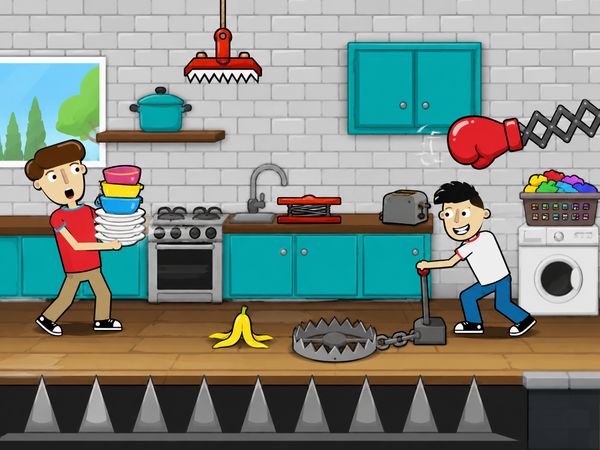
Expect traps like falling lights, swinging cabinets, and bursting taps, then slow down before they catch you.
Step 6: Use Defensive Actions
Crouch, grab, or activate hazards at the right moment to survive pressure and interrupt opponents.
Step 7: Keep Racing After Setbacks
If another player knocks you back, recover immediately and return to your route before the round gets away from you.
House of Hazards FAQs
What are the basic controls for House of Hazards?
Browser keyboard: D — move left / right - player 1; A — move left / right - player 1; W — jump - player 1; S — crouch / activate hazard - player 1; J — move left / right - player 2; L — move left / right - player 2; I — jump - player 2; K — crouch / activate hazard - player 2.
Does House of Hazards require a separate installation?
No. The browser version of House of Hazards runs on the page without a separate installation.
Is House of Hazards a multiplayer game?
House of Hazards is listed as Multiplayer.
Can I play House of Hazards on CrazyGames?
Yes. The game appears on CrazyGames as a playable browser title.
Conclusion
House of Hazards is a lively local multiplayer party game from New Eich Games, built with Unity WebGL. Its multiplayer format makes every session a shared challenge, while the hazard-focused controls give both players a direct way to affect the action. Player 1 moves with AN and D, jumps with W, and crouches or activates a hazard with S. Player 2 uses J and L to move, I to jump, and K to crouch or activate a hazard.
That clear two-player setup is what makes House of Hazards so enjoyable: the controls are easy to understand, yet each player can react, move, and activate hazards at the right moment. If you want a party game designed for local multiplayer fun, play House of Hazards right here on this page.
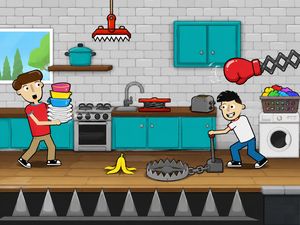
House of Hazards Game Image

No comments yet. Be the first to share your thoughts!