
Hangman
Select a letter or menu option
Game Details
- Technology: HTML5
- Playable on: Browser
- Genre: Word Puzzle
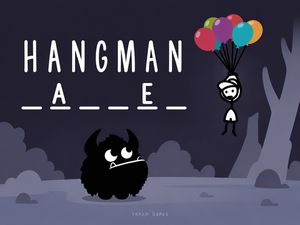
Hangman turns a few blank dashes into a tense race between your guesses and a slowly growing figure. Every letter you pick either cracks the secret word open or costs you a piece of the drawing. It is a simple idea, and it hooks you fast.
You click a letter on the on-screen keyboard, and the game answers at once. Right guesses fill in blanks. Wrong ones add to the gallows. Your job is to read the pattern before the picture finishes.
This guide covers how the board works, which letters to try first, how rounds end, and where the game came from. Ready to test your vocabulary? Try the game right here and put these ideas to work.
Every round starts with a secret word hidden behind a row of dashes. Each dash stands for one letter, so the row tells you the word's length before you guess anything. That length is your first clue, and it shapes every choice that follows.
You pick letters with a left click. The game uses an interactive on-screen keyboard, so there is nothing to type. Click a letter, and the game checks it against the hidden word.
A correct letter lands in every spot where it appears. If you pick "E" and the word has two of them, both dashes fill in together. Those revealed letters become anchors. You can look at the gaps between them and start asking what could fit.
Word lengths and vocabulary themes change from round to round, which keeps replays fresh. A five-letter word gives you little room to experiment. A long word gives you more chances to land hits early, but it also leaves more blanks to solve. Watch the pattern of dashes and filled letters, and treat each click as a question you are asking the word.
A wrong guess does not cost you a number on a counter. It adds a piece to the gallows drawing instead. That picture is your strike tracker, and you can read it at a glance without counting anything.
The feedback is immediate. Click a letter, and you see right away whether the word grew or the figure did. As the drawing fills in, the pressure rises. Slow down once the figure takes shape, because each remaining miss matters more than the last.
Start with vowels. Almost every English word leans on them, so a vowel guess is the cheapest way to open a board. Try "E" and "A" first, since they turn up more often than the others. Then move to "O", "I" and "U" as the pattern demands.
Use your results to steer. If "E" hits in the second slot, picture which words carry an E there. If "A" misses, rule out a whole family of words at once. A miss still teaches you something, which is why the first few guesses rarely feel wasted.
Watch the word length too. A short word with only one vowel will punish you if you burn guesses on letters it cannot hold. Count your dashes before you click. Three or four letters often means a single vowel, so check each one fast, then switch to consonants and lock in the structure.
Once the vowels are placed, shift to common consonants. Letters like "R", "S", "T", "N" and "L" show up in a huge share of words, so they make strong follow-ups. Look for familiar clusters too, such as "TH", "ST" or "ING" at the end of a long word.
Be careful with odd words. Ones built from unusual consonant structures, like "rhythm", are statistically among the hardest to solve. When vowels keep missing, stop guessing the usual letters and start thinking about words with no vowels in the expected places.
You win a round by revealing the full secret word before the figure is finished. Every dash must turn into a letter, and you must do it while drawing is still incomplete. That is the whole goal, and it never changes.
The best finishes come from reading the board, not from filling every blank by hand. Once enough letters show, the word often jumps out. A pattern like "_ R A _ N" may already point to one answer. Spot it early, and you save guesses that a slower player would waste.
Resist the urge to rush the last few clicks. Use leftover guesses carefully, because a wrong pick near the end can cost you the round. If two words both fit the pattern, choose the letter that separates them. That one click tells you which answer is real and keeps your remaining strikes safe.
You lose when your wrong guesses finish the full figure. Each miss adds another body part, and the round ends once the drawing is complete. The word stays hidden, and you start fresh. Treat a loss as a lesson: look back at which early guesses missed, then adjust your opening next time.
Try Hangman here and see how few strikes you can finish with.
Different vocabulary themes change how hard a round feels. A narrow topic gives you a smaller pool to think from, so each hit narrows the answer quickly. A broad set keeps you guessing longer. Words also vary in kind, and a plain noun usually plays easier than an unusual term with awkward letter pairs.
Use the theme as a free clue. If you know the topic, you can rule out letters before you click. That edge can save several guesses on a tough board.
Longer entries raise the stakes. More dashes mean more letters to uncover, but they also give you more repeated letters to hit. Common short words inside a phrase, like "THE" or "AND", can crack a board open fast. Look for those small patterns first, then work outward. Puzzle fans who enjoy this kind of deduction can also browse the Puzzle category, or try Thief Puzzle for a different kind of thinking challenge.
Use Left Click to select a letter or menu option.
Count the number of blank spaces displayed on screen to determine the length of the hidden word.
Click common vowels such as E, A, or I on the on-screen alphabet to expose root vowel structures.
Choose versatile consonants like T, N, S, or R to reveal familiar prefixes, suffixes, and letter clusters.
Keep track of the drawn gallows parts after incorrect picks to avoid exhausting your allowed attempts.
Identify the remaining letters based on context clues to fill every dash and win the round.
Browser mouse: Left Click — select a letter or menu option.
Yes. Hangman runs in your phone or tablet browser. It is played by pointing and clicking, so a tap does the same job.
No. Hangman runs in your browser on this page, with nothing to download or install.
One player or the computer selects a secret word displayed as blank dashes. You guess letters one by one; correct guesses fill blanks, while mistakes draw a gallows figure until you solve the word or run out of strikes.
Yes, it is widely utilized for teaching vocabulary, spelling, and deductive reasoning. Players actively analyze word structures, vowel placement, and common consonant combinations.
Words with rare letters and no common vowels, such as 'rhythm' or 'jazz', rank among the most difficult. Unorthodox spelling patterns make deduction significantly harder within standard strike limits.
Helpful Resources:
Hangman is a classic word puzzle that proves simple ideas never go out of style. Built with HTML5 and playable right in your browser, it needs no downloads or setup, so you can jump straight into the challenge.
Controls couldn't be easier: just left click to select a letter or menu option. That straightforward approach keeps the focus on what matters, working out the hidden word one guess at a time. It's a satisfying test of vocabulary and logic that suits quick breaks as well as longer sessions.
Ready to put your word skills to the test? Start playing Hangman here on this page and see how many words you can crack.
No comments yet. Be the first to share your thoughts!